How to Deep Clean a Fabric Sofa Without Wrecking It
The letter on the label under your sofa decides everything. Get it wrong and you will set the stain or mark the fabric permanently.
Before you put anything wet on a sofa, find the care label. It is usually on the underside of a seat cushion or stitched into the frame beneath the sofa, and it carries a single letter that decides which methods are safe. Ignoring it is how people turn a dirty sofa into a permanently marked one.
The cleaning codes, and what they mean
- W: water-based cleaning is safe. You can use water and an upholstery detergent
- S: solvent only. Water will mark or shrink this fabric, and a dry-cleaning solvent must be used instead
- WS or SW: either method is acceptable, which gives you the most room to work
- X: vacuum only. No water, no solvent. Anything beyond vacuuming needs a professional
If there is no label at all, treat the sofa as S until proven otherwise and test any method on a hidden area first, such as the back panel or underneath a cushion.
Vacuum properly first, and do not skip it
Most of what makes a sofa look tired is dry particulate sitting in the weave rather than staining. Introduce water before you have removed it and you turn loose soil into a slurry that spreads and wicks, which is the most common cause of a sofa looking worse after cleaning than before.
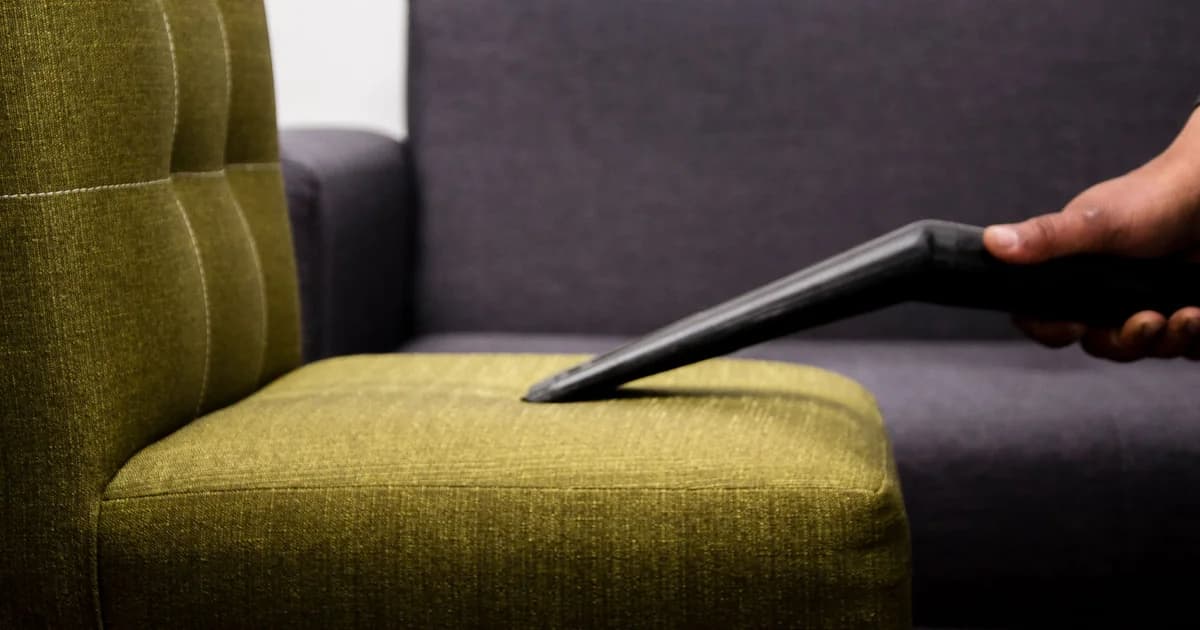
Use the upholstery tool, work in overlapping passes, and do the crevices, under the cushions and the back and sides as well as the seats. A slightly damp rubber glove drawn across the fabric will gather pet hair that a vacuum leaves behind.
Treat stains before you clean the whole thing
Blot, never rub. Rubbing drives the stain deeper into the fibre and distorts the pile, which leaves a visible patch even after the colour has gone. Work from the outside of the stain inwards so you do not spread the edge.
Two mistakes cause most permanent damage. Heat sets protein stains, so never use hot water on blood, milk, egg or anything similar. And bleach-based or strongly alkaline products will lift dye out of upholstery fabric far more readily than they lift the stain.
The actual deep clean, on a W or WS fabric
Mix an upholstery detergent according to its instructions, which will be far more dilute than most people assume. Work in sections roughly the size of a cushion, applying with a microfibre cloth or a soft brush rather than pouring. The fabric should be damp, never wet. If you can press a dry cloth onto it and lift moisture, you have used too much.
Rinse each section with a cloth wrung out in clean water to lift the detergent back out. Detergent left in the fabric is sticky and attracts soil, which is why a badly cleaned sofa gets dirty again unusually fast.
Drying is where sofas get ruined
A sofa that stays damp for a long time can develop a musty smell that is much harder to remove than the original soiling, and watermark rings form where moisture dries unevenly at the edge of a damp patch. Ventilate the room, open windows, and put a fan on it. Do not put cushions back on until everything is fully dry, including the foam underneath.
This is a real constraint in a Manchester winter, when opening windows for several hours is unappealing and humidity is high. Cleaning upholstery on a mild dry day is genuinely easier than doing it in February.
Where the DIY limit actually sits
Surface soiling and fresh spills are well within reach of a careful home clean. What is not is soil that has worked into the foam, odour that has soaked through, old set stains, and anything on an S or X coded fabric. Domestic methods only clean the surface of the textile, because they have no way to pull moisture and soil back out of the depth of the cushion.
Professional hot water extraction injects solution and vacuums it straight back out under suction, which is what removes soil from within the fill rather than just the face fabric, and what leaves it dry enough to avoid the drying problems above.
Our upholstery cleaning across Manchester covers sofas, armchairs, dining chairs and mattresses, works to the fabric's own cleaning code, and is done in your home with drying times measured in hours rather than days.
Rather Let the Professionals Handle It?
We provide professional cleaning across Manchester and Greater Manchester. Free quotes, no deposits, and a 100% satisfaction guarantee.