What's Included in an After Builders Clean?
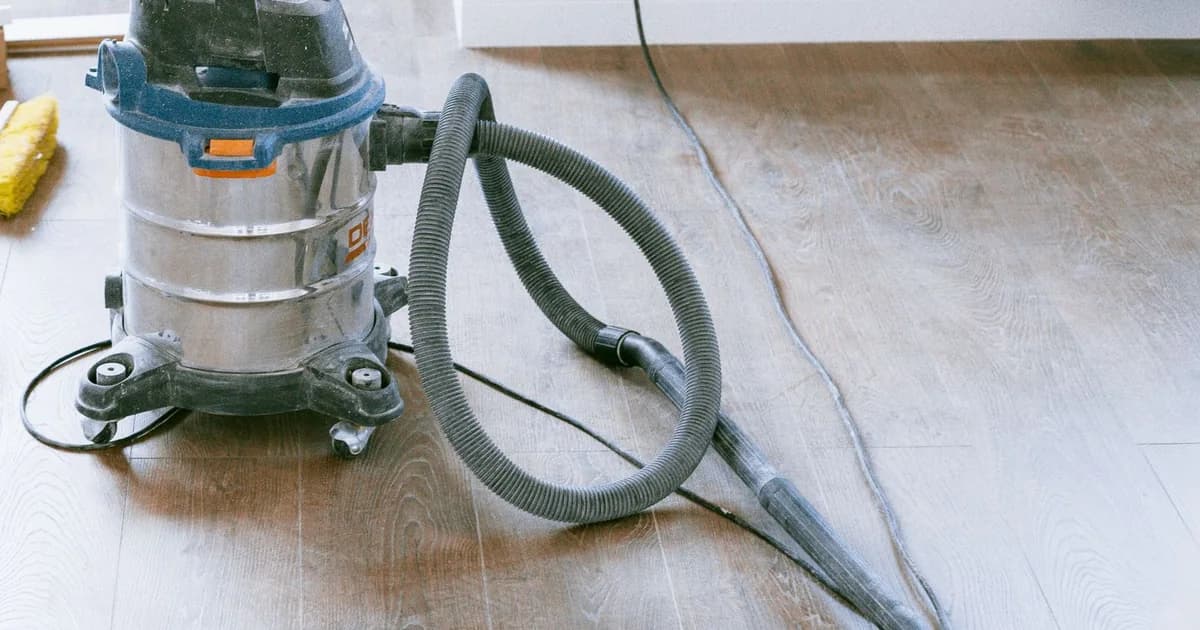
Builders dust gets everywhere and behaves nothing like household dust. Here is what a post-construction clean actually covers, stage by stage.
An after builders clean is not a deep clean with a different name. The job is removing construction residue, and construction residue behaves nothing like household dirt. Plaster dust is fine enough to pass through a standard vacuum filter and settle again an hour later. Silicone smears, paint speckle, adhesive and grout haze all need solvents or scrapers rather than detergent. If you book a standard domestic clean after a renovation, the most likely outcome is a house that looks clean until the light changes.
Why builders dust is a different problem
Plaster and MDF dust is light, abrasive and electrostatic. It rides air currents into places nothing else reaches: the tops of door frames, curtain rails, inside light fittings, the lip above kitchen units, the runners of every drawer. It also resettles. Clean a room once and a second layer will appear as soon as anyone walks through it, because the dust is still suspended in the air and sitting in the carpet pile.
That is why a proper post-construction clean works top down and runs in more than one pass. A single wipe-over is wasted effort.
Stage one: debris and coarse residue
The first pass removes anything physical. Offcuts, packaging, protective film on appliances and glazing, masking tape, plaster lumps on floors, and the fine grit that scratches surfaces if you wipe it rather than lift it. Protective sheeting comes up at this point, not before, because pulling it early spreads everything it was protecting against.
Skipping this stage is the single most common reason a renovation clean disappoints. Wiping a dusty worktop with a damp cloth turns dust into a paste that then has to be removed twice.
Stage two: the detailed clean
This is the bulk of the work and where the hours go. Everything is worked from ceiling height downwards so nothing falls onto a finished surface:
- Light fittings, extractor vents, smoke alarms and the tops of door frames
- Paint speckle and plaster splash removed from glass, tiles, sockets and switches
- Silicone smears, adhesive residue and grout haze taken off tiling and sanitaryware
- Inside and outside of all kitchen units, including drawer runners and the gap above wall cupboards
- New appliances cleaned inside and out, and the protective film removed from every face
- Window glass, frames, sills and the runners where dust collects
- Skirtings, radiators, radiator backs and the pipework behind them
- Hard floors washed more than once, carpets vacuumed with a machine that holds fine particulate
Stage three: the settle pass
Dust disturbed during stage two lands again. A final pass over horizontal surfaces, glass and floors catches it. On a large refurbishment this is sometimes done as a separate visit a day or two later, which is worth asking about if the property has been stripped back to brick or had ceilings down.
What is usually not included
Being clear about the boundary saves an argument later. A cleaning team is not a waste contractor and not a snagging contractor. These items normally sit outside the job unless agreed in writing beforehand:
- Removing rubble, heavy waste or anything needing a skip or tip run
- Paint touch-ups, filling, or correcting the builder's finish
- Moving heavy furniture or appliances that are not already in position
- Cleaning external areas, gutters or scaffolding debris
- Anything requiring work at height beyond a standard step ladder
Book it after snagging, not before
The most expensive mistake is booking the clean before the trades have finished. If a snagging list still has a decorator returning to touch up woodwork, or a plumber coming back to reseal a shower tray, you will pay for the clean twice. Wait until the last person with tools has left.
The exception is a handover deadline you cannot move, where a pre-handover clean and a post-snagging touch-up are budgeted as two separate visits from the start. That is a deliberate choice rather than an accident.
How long it takes
There is no useful average, because the variable is not floor area but how invasive the work was. A single bathroom refit in a Didsbury terrace is a different job from a full rewire and replaster across three floors in Salford, even if the second property is only twice the size. Anyone quoting you without asking what work was done, how many rooms were affected, and whether ceilings came down is guessing.
Ask for a fixed price for the whole job rather than an hourly rate. Hourly pricing on a post-construction clean transfers all the risk of an unknown scope onto you.
Getting a realistic quote
When you get in touch, the details that actually change the price are the number of rooms affected, what trades were involved, whether the property is furnished or empty, and whether the floors are being kept or replaced. Photographs help more than descriptions.
Our after builders cleaning service across Manchester and Greater Manchester is quoted as a fixed price for the whole job, with all products and equipment included. We quote over the phone or from photographs, so there is no site visit to arrange and no deposit to pay before the work is done.
Rather Let the Professionals Handle It?
We provide professional cleaning across Manchester and Greater Manchester. Free quotes, no deposits, and a 100% satisfaction guarantee.